Why the Compliance Threshold That Blocks Your Corporate Gift Is the One Your Recipient Enforces, Not Yours
There is a compliance failure mode in corporate gift procurement that I encounter with uncomfortable regularity, and it is almost never the one that procurement teams prepare for. The failure they anticipate is straightforward: a gift that exceeds a declared value ceiling, triggering an anti-bribery flag on either the giving or receiving side. That scenario is well understood, well documented, and well controlled by most organisations operating in the UAE. The failure mode that actually causes damage is subtler. It occurs when the gift clears the giver's internal compliance review but creates a compliance problem at the recipient's organisation—a problem the giver never learns about, because the recipient simply declines the gift quietly, or accepts it and files a disclosure that reframes the business relationship in terms the giver did not intend.
The root of this problem is that corporate gift compliance operates on two separate value systems that rarely align. The first is actual cost—the amount the giver paid for the gift, documented on the purchase order and the supplier invoice. The second is perceived value—the amount the recipient's compliance officer estimates the gift is worth when it arrives on the recipient's desk and must be logged in a gift register. These two numbers can diverge dramatically depending on the product category, and that divergence is what silently determines which types of corporate gifts are actually deliverable to which types of recipients. A branded leather notebook that costs AED 85 to produce—including material, customisation, and packaging—may be assessed by the recipient's compliance team at AED 200 to AED 300 based on what a comparable retail product would cost. A wireless charging pad that costs AED 90 to source has a retail-equivalent value that the recipient can verify in thirty seconds on any e-commerce platform, and that verified value is typically AED 180 to AED 250. A premium pen set that costs AED 75 has a perceived value that can range from AED 120 to AED 400 depending on the brand association and presentation quality. The giver's compliance team approved all three gifts based on actual cost. The recipient's compliance team evaluates all three based on perceived value. And the gap between those two assessments is where corporate gift type decisions quietly unravel.
This matters operationally because different recipient sectors in the UAE enforce different compliance thresholds, and those thresholds are applied to perceived value, not to the giver's invoice cost. Government entities and semi-government organisations—which constitute a significant portion of B2B relationships in the UAE—typically operate under the strictest frameworks. UAE Federal Decree-Law No. 31 of 2021 on Combating Rumours and Cybercrime updated and reinforced the anti-bribery provisions that apply to public officials, and most government entities have implemented internal gift policies that set acceptance thresholds well below what the law technically prohibits. In practice, many UAE government departments enforce a de facto acceptance ceiling of AED 200 to AED 300 per gift, with anything above that amount requiring formal disclosure, pre-approval from a supervisor, or outright refusal. Banking and financial services institutions, regulated by the Central Bank of the UAE, maintain their own gift and entertainment policies that typically mirror international standards—often capping acceptable gifts at AED 100 to AED 500 depending on the institution's risk appetite and the seniority of the recipient. Private sector companies with multinational parent organisations frequently import compliance frameworks from their headquarters jurisdiction, which means a UAE-based subsidiary of a UK company may apply UK Bribery Act thresholds that are more restrictive than local UAE requirements.
The practical consequence of this layered compliance environment is that the procurement team selecting corporate gifts must make a type decision that accounts not only for their own organisation's budget and compliance framework, but for the compliance framework of every recipient category on their distribution list. This is where the misjudgment consistently occurs. A procurement team planning a client appreciation programme might select a premium branded stationery set—a leather-bound notebook with debossed logo, a matching pen, and a presentation box—at a total production cost of AED 120 per set. Their internal compliance review approves the gift because AED 120 is well within their organisation's gifting threshold. The gift is produced, packaged, and dispatched to a recipient list that includes government officials, banking executives, and private sector clients. The government official's assistant opens the package, assesses the perceived value at AED 350 based on the quality of the leather, the weight of the pen, and the presentation packaging, and flags it for disclosure. The banking executive's compliance team logs it at AED 280 and files a routine notification. The private sector client accepts it without friction. The same gift, at the same actual cost, has created three different compliance outcomes across three recipient categories—and the procurement team that selected it has no visibility into any of them.
In practice, this is often where corporate gift type decisions start to be misjudged—not because the procurement team selected an inappropriate product, but because they evaluated the product against the wrong value metric. The question they asked was "Does this gift fit within our budget and our compliance ceiling?" The question they should have asked was "How will this gift be valued by the compliance function at each recipient's organisation, and does that assessed value create friction that undermines the gift's purpose?" These are fundamentally different questions, and they produce fundamentally different product selections.
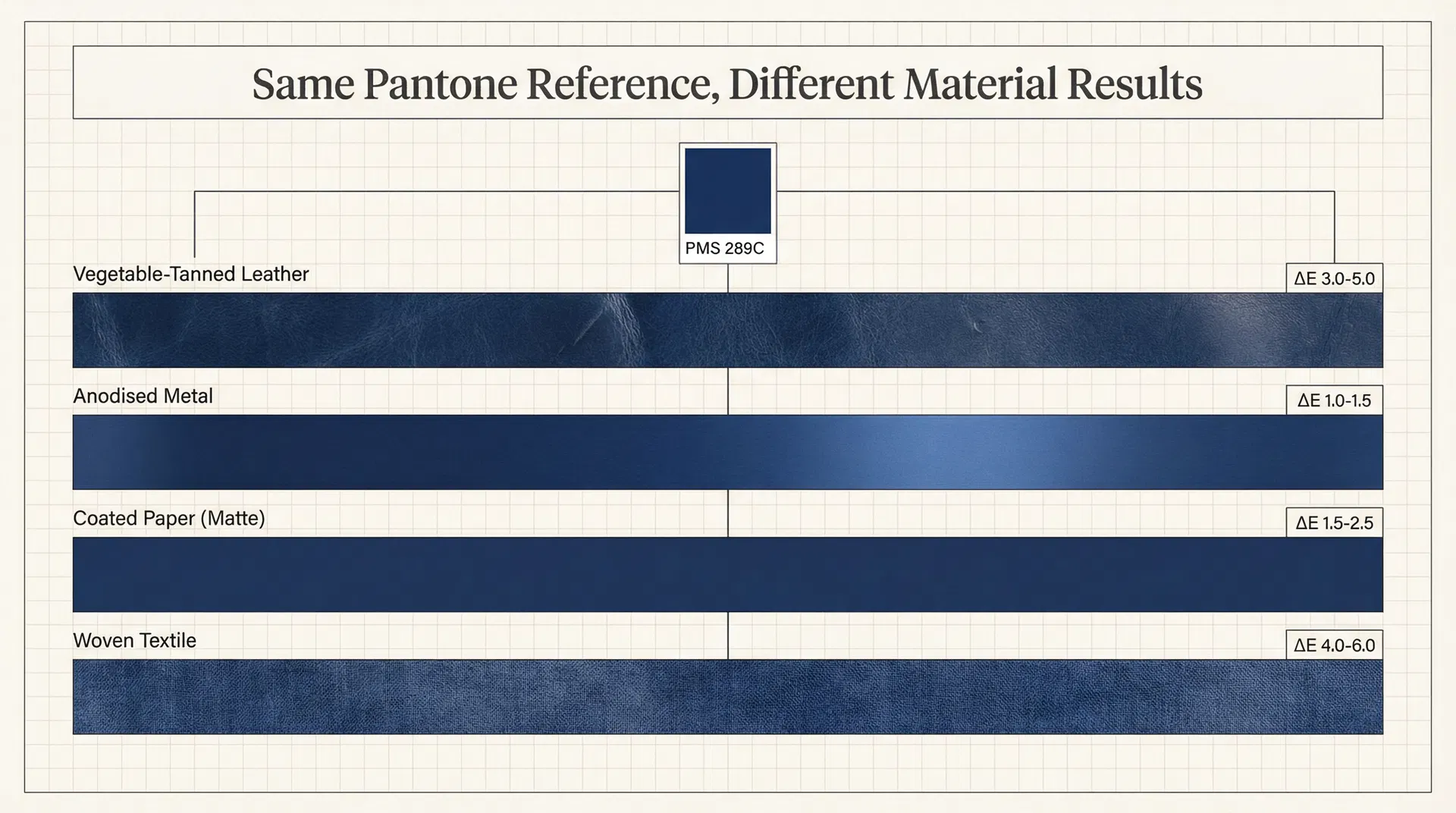
The product categories that create the most compliance friction are, counterintuitively, not the most expensive ones. They are the ones with the highest perceived-to-actual-cost ratio and the easiest external price verification. Consumer electronics sit at the top of this risk profile. A Bluetooth speaker, a wireless earbuds set, or a portable power bank can be sourced at relatively modest wholesale costs, but every recipient can search the retail price within seconds. The compliance assessment defaults to the retail price, not the wholesale cost, and the gift immediately occupies a higher compliance tier than the giver intended. Luxury consumables—premium chocolates, gourmet hampers, specialty coffee sets—occupy a middle ground where perceived value is high but external price verification is difficult, which creates ambiguity that some compliance officers resolve conservatively by estimating upward. Branded stationery and office accessories occupy a distinctly different position in this compliance landscape. A custom notebook, a premium pen, a leather document folder—these products have ambiguous retail equivalents because the customisation itself makes direct price comparison difficult. There is no retail listing for a notebook with a specific company's debossed logo, a particular Pantone-matched cover colour, and a custom internal layout. The compliance officer assessing this gift must estimate its value based on general category comparisons rather than specific product matches, and that estimation process typically produces a lower assessed value than the same actual cost spent on a product with a clear retail benchmark.
This is not a theoretical advantage. I have reviewed gift register data from three UAE-based financial institutions where the compliance team's assessed values for branded stationery gifts averaged 1.4 to 1.8 times the actual cost, while assessed values for consumer electronics gifts averaged 2.2 to 3.1 times the actual cost. The same AED 100 procurement budget, allocated to stationery versus electronics, produces a compliance-assessed value of approximately AED 150 versus AED 260 at the recipient's end. For a recipient organisation with a AED 200 acceptance threshold, the stationery gift passes without friction while the electronics gift triggers a disclosure requirement or refusal. The procurement team that selected the electronics gift has not violated any rule. But they have created a compliance event at the recipient's organisation that transforms what was intended as a relationship-building gesture into an administrative burden—or worse, a signal that the giver is either unaware of or indifferent to the recipient's compliance obligations.

The VAT dimension adds another layer that procurement teams frequently overlook. Under UAE Federal Tax Authority guidelines, if the total value of gifts provided to a single person exceeds AED 500 within a twelve-month period and input tax has been claimed on those items, the gift may be treated as a "deemed supply" subject to VAT. This AED 500 threshold is cumulative and per-recipient, which means that a company sending gifts at multiple touchpoints throughout the year—Ramadan, National Day, a project completion milestone, an annual appreciation event—must track the aggregate value per recipient across all occasions. The threshold is based on the gift's market value, not the production cost, which means the same perceived-value inflation that affects the recipient's compliance assessment also affects the giver's VAT obligation. A company that sends four branded stationery items across four occasions at AED 85 production cost each has spent AED 340 in actual cost but may have provided AED 500 to AED 600 in assessed market value, potentially triggering the deemed supply provision. The procurement team that planned each gift individually within budget has inadvertently created a cumulative tax event that their finance team did not anticipate.
The interaction between these compliance layers—the giver's internal threshold, the recipient's internal threshold, the anti-bribery legal framework, and the VAT deemed supply provision—creates a decision matrix that is far more constrained than most procurement teams realise when they begin the gift type selection process. The effective compliance envelope is not the giver's threshold. It is the intersection of all applicable thresholds, and that intersection is almost always smaller than any individual threshold. A procurement team operating under an internal ceiling of AED 500 per gift, sending to government recipients with a AED 250 perceived-value acceptance limit, while managing cumulative VAT exposure across four annual touchpoints, has an effective per-occasion budget that is closer to AED 100 in actual cost—assuming a product category with a 1.5x to 2x perceived-value multiplier. At that effective budget, the range of corporate gift types that can deliver genuine quality impression while remaining within all applicable compliance boundaries narrows significantly. Premium branded stationery—custom notebooks, executive pen sets, leather desk accessories, presentation folders—occupies this narrow band because the product category combines material quality that communicates professional respect with a perceived-value profile that does not trigger compliance escalation at the recipient's end.
What I find most instructive about this compliance dynamic is that it inverts the conventional wisdom about corporate gift selection. The standard approach treats compliance as a constraint that is applied after the gift type has been selected—a final check before the order is placed. The reality is that compliance thresholds, particularly the recipient's compliance thresholds, should be the first input into the type selection process, not the last. When a procurement team understands that their government-sector recipients operate under a AED 250 perceived-value ceiling, the question is no longer "What is the best gift we can buy for AED 250?" The question becomes "Which product category delivers the highest quality impression per unit of perceived value?" And that question, when answered honestly, consistently points toward products where the customisation and craftsmanship are embedded in the object itself rather than reflected in a searchable retail price—products where the value is felt by the recipient rather than verified by their compliance officer. Understanding how different gift types align with specific business contexts requires factoring in this compliance reality from the earliest stage of selection, because the most thoughtfully chosen gift becomes counterproductive if it creates a compliance event that the recipient must manage rather than appreciate.
The companies that navigate this well do not treat compliance as a ceiling. They treat it as a design constraint that shapes the entire gifting programme architecture. They segment their recipient lists not only by relationship tier and business occasion, but by recipient compliance profile. They select product categories based on perceived-value efficiency—the ratio of quality impression to compliance-assessed value—rather than on absolute product quality or absolute cost. They maintain documentation that records not only what they spent, but what the gift is likely to be assessed at by the recipient's organisation, so that their relationship managers are never surprised by a declined gift or an awkward disclosure conversation. And they recognise that in a regulatory environment where compliance frameworks are tightening across the GCC—where government entities are professionalising their gift acceptance policies, where financial institutions are aligning with international anti-corruption standards, and where multinational subsidiaries are importing increasingly conservative headquarters policies—the corporate gift types that will remain viable over the next five years are not the ones that maximise impact per dirham spent. They are the ones that maximise impact per unit of perceived compliance exposure. That distinction is not academic. It is the difference between a gifting programme that builds relationships and one that quietly, invisibly, creates friction in every relationship it touches.