Which Types of Corporate Gifts Are Best for Different Business Needs in the UAE
Choosing the right corporate gift in the UAE depends on three factors most procurement teams underestimate: the business relationship stage, the recipient's organisational culture, and the compliance boundaries that apply to both parties. Executive onboarding gifts require different material quality and branding subtlety than conference giveaways. Client retention gifts for government-linked entities carry regulatory constraints that private-sector gifting does not. And employee recognition gifts that work for a 50-person startup will misfire at a 5,000-person multinational. This guide breaks down which types of corporate stationery gifts match which business scenarios in the UAE market—based on practical procurement patterns, not product catalogues.
Why Corporate Gift Selection Is a Strategic Decision for UAE Businesses
In our experience advising procurement teams across the Gulf region, the single most common mistake in corporate gifting is treating it as a purchasing task rather than a strategic communication decision. A corporate gift is not an expense line—it is a brand signal that reaches decision-makers at moments when your marketing materials cannot. The notebook that sits on a CFO's desk for nine months delivers more brand impressions than a LinkedIn campaign that runs for a week.
From a budget control perspective, corporate gifting in the UAE typically represents 1.5–3% of a company's annual marketing and client relations budget. For a mid-sized firm spending AED 500,000 annually on client engagement, that translates to AED 7,500–15,000 allocated to physical gifts. The question is not whether to spend this amount, but whether the items purchased generate measurable relationship value or end up in a drawer within 48 hours. Based on past procurement reviews we have conducted, roughly 40% of corporate gifts distributed in the UAE are never used by recipients—not because the items are poor quality, but because they were mismatched to the business context.
From a brand image perspective, the quality of a corporate gift communicates your organisation's standards more directly than any brochure. In the UAE business environment, where face-to-face relationship building remains central to deal-making, a poorly chosen gift can undermine months of relationship investment. We have seen procurement teams spend AED 200,000 on a trade show booth and then distribute AED 3 plastic pens at the same event—a disconnect that recipients notice immediately.
From a compliance and regulatory perspective, UAE Federal Decree-Law No. 20 of 2018 on Anti-Money Laundering and the broader anti-bribery frameworks that govern government-linked entities impose real constraints on gift values and types. Gifts exceeding certain thresholds to government officials or semi-government entity employees can trigger reporting requirements. Understanding these boundaries before procurement—not after—is essential for any corporate gifting programme that includes public-sector stakeholders.
The Practical Procurement Process for Corporate Gifts in the UAE
The procurement workflow for corporate gifts in the UAE follows a pattern that most guides oversimplify. In practice, the process involves five distinct stages, each with its own execution challenges that procurement teams frequently underestimate.
Stage 1: Needs Assessment and Recipient Mapping. Before selecting any product, the procurement team must map the recipient universe. This means categorising recipients by relationship type (client, prospect, employee, government stakeholder, partner), relationship stage (new, established, at-risk), and cultural context (local Emirati, expatriate Arab, Western expatriate, South Asian). Each segment has different expectations. In our experience, procurement teams that skip this mapping stage end up ordering a single gift type for all recipients—which satisfies none of them optimally.
Stage 2: Budget Allocation by Tier. Effective corporate gifting programmes in the UAE operate on a tiered budget structure. A common framework allocates 60% of the total budget to Tier 1 recipients (key clients and senior stakeholders), 25% to Tier 2 (broader client base and mid-level contacts), and 15% to Tier 3 (conference attendees, general networking). The practical difficulty here is that most organisations set a flat per-unit budget rather than a tiered structure, which results in either overspending on low-priority recipients or underspending on high-value relationships.
Stage 3: Supplier Evaluation and Sample Review. This is where the UAE market presents a unique challenge. Dubai alone has over 200 corporate gift suppliers, ranging from trading companies that import finished goods to manufacturers that produce custom-branded stationery from raw materials. The quality variance between these two supplier types is significant. A trading company may offer lower unit prices but cannot control material consistency across reorders. A manufacturer can guarantee specification consistency but typically requires higher minimum order quantities. The sample review stage must evaluate not just the sample quality but the supplier's ability to replicate that quality at production scale—a distinction that procurement teams often overlook.
Stage 4: Customisation Specification and Approval. For branded corporate gifts, the customisation stage introduces the most common timeline delays. Logo placement, colour matching (Pantone versus CMYK versus screen display), material finishing (embossing depth, foil stamping adhesion, UV coating coverage), and packaging design all require formal approval cycles. In practice, this stage alone can consume 15–25 business days if the approval chain involves marketing, brand compliance, and senior management sign-off. Understanding the production lead time implications of customisation decisions is critical to meeting delivery deadlines.
Stage 5: Delivery Logistics and Distribution. A frequently overlooked aspect of corporate gifting in the UAE is the last-mile distribution challenge. For Ramadan or National Day gifting programmes, hundreds of gifts may need to reach recipients across Dubai, Abu Dhabi, Sharjah, and the Northern Emirates within a narrow delivery window. Coordinating this requires advance planning—not just with the supplier but with internal teams responsible for recipient address verification and delivery scheduling. One practical consideration specific to the UAE: during Ramadan, business hours shift and many offices operate on reduced schedules, which affects both production timelines and delivery windows.
Matching Gift Types to Business Scenarios: A Decision Framework
The core question—which types of corporate gifts work best for which business needs—requires a framework that goes beyond product categories. In practice, we find that the most effective approach maps gift selection against three variables: the business objective (what you want the gift to achieve), the recipient context (who receives it and under what circumstances), and the practical constraints (budget, timeline, compliance).
Client Acquisition and First Impressions
When the objective is to establish credibility with a new business contact, the gift must communicate quality without appearing excessive. In the UAE market, where first impressions carry significant weight in relationship-based business culture, the gift functions as a tangible proof point of your organisation's standards. Premium branded pens and executive notebooks remain the most effective category for this scenario—not because they are original, but because they are used daily and create repeated brand exposure. The critical factor is material quality: a metal-body pen with laser engraving communicates a fundamentally different message than a plastic pen with pad printing. Budget range for this tier typically falls between AED 45–150 per unit.
Client Retention and Relationship Deepening
For existing clients where the relationship has matured beyond initial courtship, gifts need to demonstrate ongoing attentiveness rather than introductory generosity. This is where leather-bound journals, branded desk sets, and curated stationery collections outperform generic gift baskets. The key insight from our procurement consulting experience is that retention gifts should be items the recipient would not purchase for themselves but will use regularly. A premium leather notebook with the recipient's initials (not your company logo) alongside subtle brand placement on the inner cover creates a personal connection that logo-forward gifts cannot achieve. Budget range: AED 120–350 per unit.
Employee Recognition and Internal Engagement
Employee gifting in the UAE operates under different dynamics than client gifting. The workforce is predominantly expatriate, representing over 40 nationalities in many organisations, which means cultural assumptions about gift preferences are unreliable. In practice, the most effective employee recognition gifts are items that combine professional utility with perceived personal value. Branded stationery sets that include a quality notebook, pen, and desk organiser work consistently across cultural backgrounds because they are universally useful in a professional context. For milestone recognition (work anniversaries, promotions), upgrading to premium materials—genuine leather, metal hardware, custom packaging—signals that the recognition is genuine rather than procedural. Budget range: AED 35–200 per unit depending on the milestone level.
Conference and Event Giveaways
Conference gifts serve a fundamentally different purpose than relationship gifts: they need to be memorable enough to survive the journey home but cost-effective enough to distribute at scale. In the UAE's active conference circuit—GITEX, Arabian Travel Market, ADIPEC—attendees collect dozens of branded items per event. The gifts that survive the hotel-room cull are those that solve an immediate problem. Branded memo pads, quality writing instruments, and compact document folders consistently outperform novelty items because attendees use them during the event itself. Budget range: AED 8–45 per unit.
Seasonal and Cultural Occasion Gifts
The UAE calendar creates several high-impact gifting windows: Ramadan, Eid al-Fitr, Eid al-Adha, UAE National Day (December 2), and the year-end holiday season. Each occasion carries specific expectations. Ramadan gifts should be elegant and understated, reflecting the contemplative nature of the month—premium stationery in muted tones with tasteful packaging works well. National Day gifts can incorporate the UAE flag colours (red, green, white, black) into product design or packaging. The practical challenge is timing: Ramadan dates shift annually, and suppliers experience peak demand 6–8 weeks before the month begins. Procurement teams that wait until Ramadan is announced to begin ordering typically face premium pricing and limited customisation options.

Key Decision Factors: Material, Customisation, and Lead Time Trade-offs
Every corporate gift procurement decision involves trade-offs between three interconnected variables: material quality, customisation complexity, and delivery timeline. Understanding how these variables interact prevents the most common procurement failures we observe in the UAE market.
Material quality directly affects perceived value and longevity. A PU leather notebook cover costs approximately 40% less than genuine leather but has a noticeably different tactile quality that recipients—particularly in the UAE's luxury-accustomed market—will recognise. The trade-off is not simply cost: genuine leather requires longer production lead times (the material must be sourced, inspected, and conditioned before cutting), and defect rates during production are higher (natural material inconsistencies mean 5–8% of units may not meet quality standards). For orders under 500 units, the cost differential between PU and genuine leather typically adds AED 15–25 per unit. For orders above 2,000 units, economies of scale reduce this differential to AED 8–12 per unit.
Customisation complexity determines both timeline and minimum order requirements. Simple one-colour logo printing can be completed in 3–5 business days with minimum orders as low as 100 units. Multi-colour printing, embossing, debossing, or foil stamping each add 5–10 business days and typically require minimum orders of 300–500 units. Full custom product development—bespoke notebook dimensions, custom paper weights, unique binding methods—can require 30–45 business days and minimum orders of 1,000+ units. The practical implication is that procurement teams must align their customisation ambitions with their timeline reality. We frequently encounter situations where a marketing team specifies gold foil stamping with embossed logos on genuine leather, then expects delivery in two weeks—a timeline that is physically impossible for that specification combination.
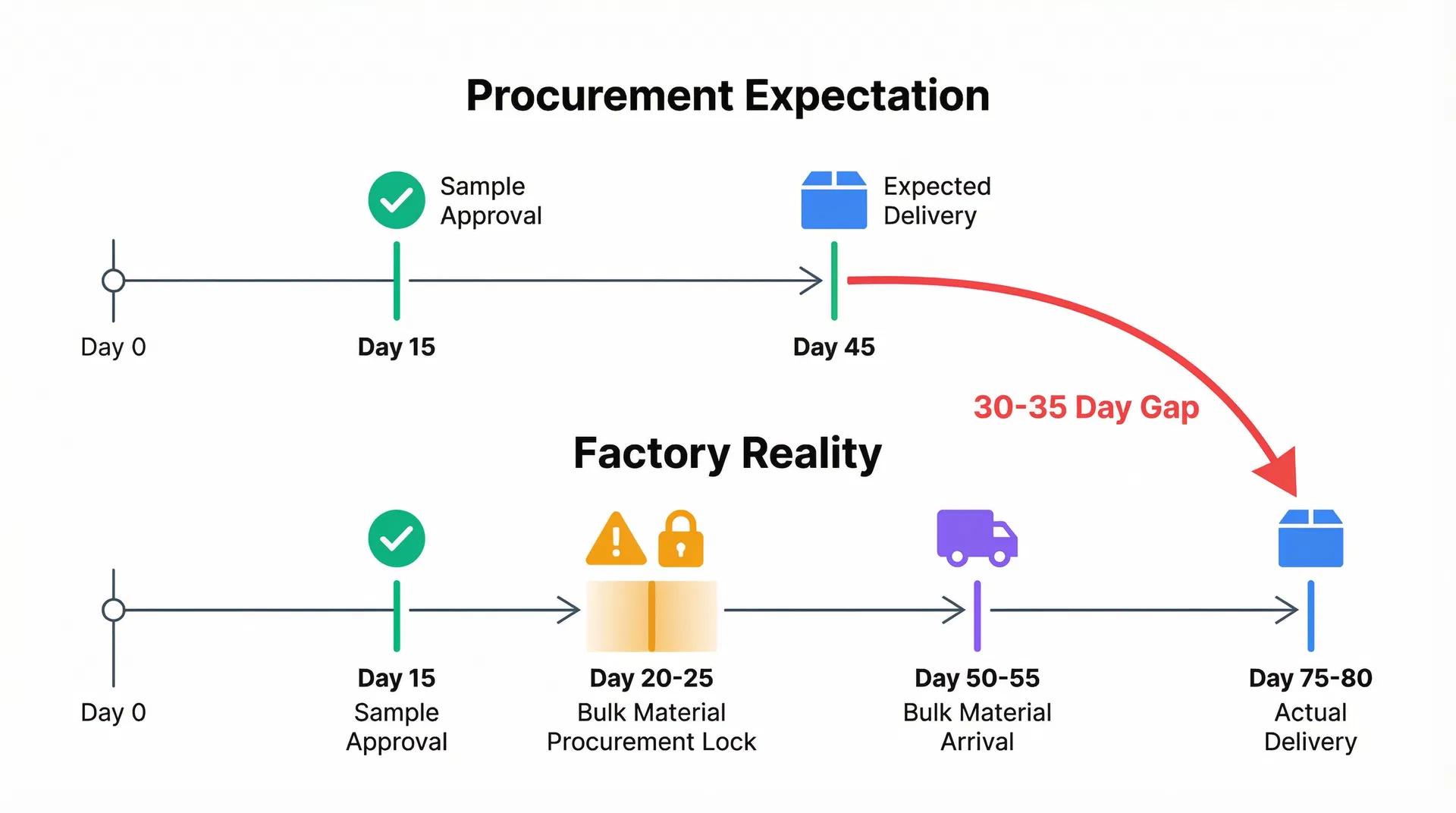
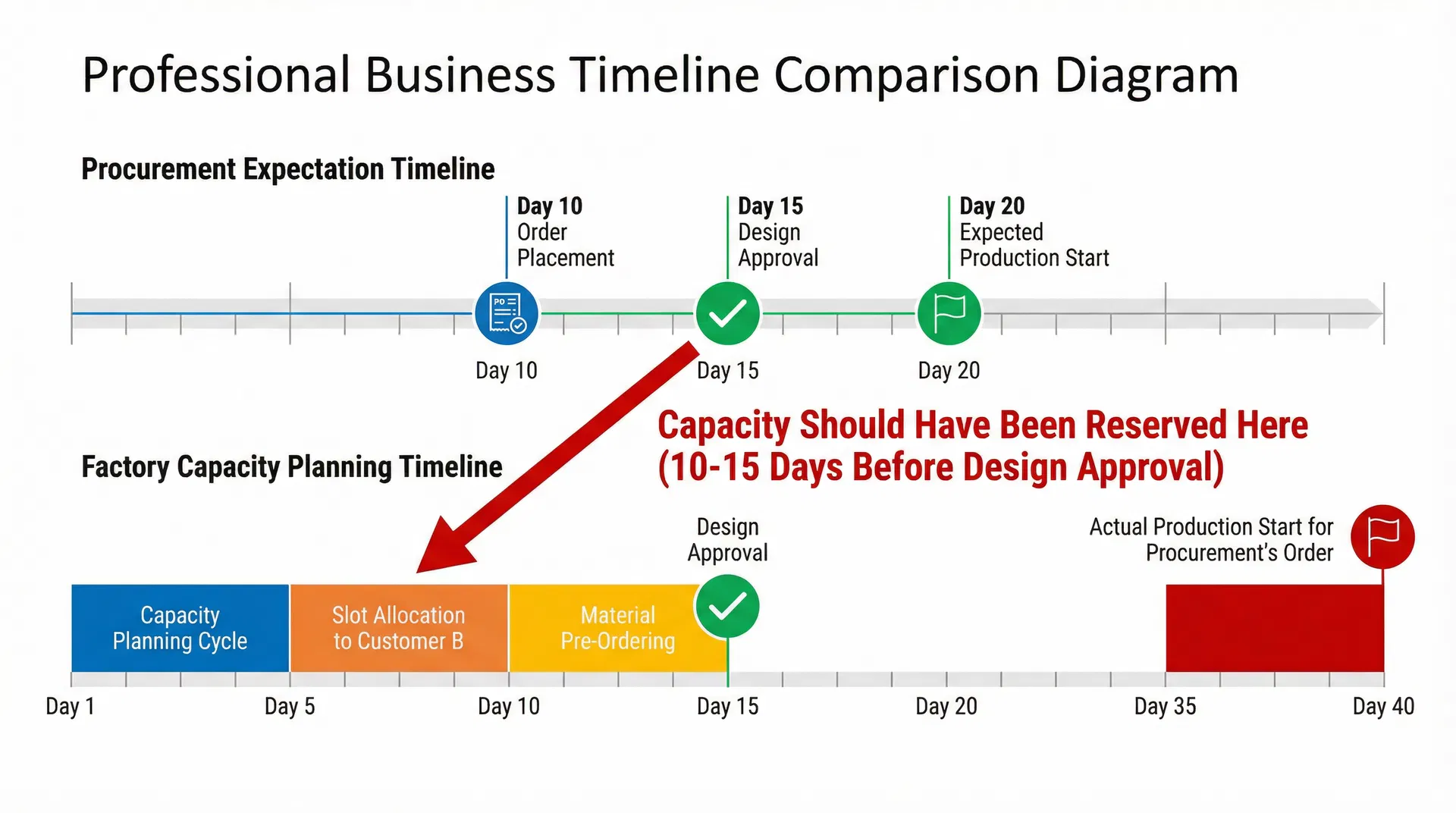
Lead time is the variable that procurement teams most consistently underestimate. In the UAE market, the total procurement cycle from initial enquiry to delivered goods typically ranges from 25–60 business days for customised corporate stationery. This includes supplier selection (5–7 days), sample production and approval (10–15 days), production (10–25 days depending on quantity and complexity), and shipping/delivery (3–10 days). The most common timeline failure occurs when procurement teams compress the sample approval stage—approving samples hastily to meet a deadline, then discovering quality issues during production that require rework and further delay.
Tailored Strategies for Different Company Sizes
Startups and SMEs (Under 200 Employees)
For smaller organisations, the primary constraints are budget flexibility and minimum order quantities. A startup that needs 50 branded notebooks for a pitch event cannot access the same per-unit pricing as a corporation ordering 5,000 units. The practical strategy for SMEs involves three approaches. First, consolidate annual gifting needs into fewer, larger orders rather than placing multiple small orders throughout the year—this reduces per-unit costs by 15–25% and gives the supplier sufficient volume to offer customisation options. Second, select product types that offer maximum perceived value at moderate cost points: a well-designed A5 hardcover notebook with quality paper and clean logo placement delivers stronger brand impact than a more expensive but generic gift basket. Third, prioritise suppliers who offer low-MOQ programmes specifically designed for SME volumes—these exist in the UAE market but require active sourcing rather than defaulting to the first supplier quote received.
Large Enterprises and Multinational Corporations
For organisations with 500+ employees and multi-market operations, the challenges shift from budget constraints to compliance management, brand consistency, and logistical coordination. A multinational corporation gifting across UAE, Saudi Arabia, and Qatar must ensure that gift specifications meet brand guidelines across all markets, that gift values comply with each jurisdiction's anti-bribery thresholds, and that delivery logistics can handle simultaneous distribution across multiple cities. The practical strategy involves establishing a preferred supplier framework with pre-approved product specifications, pre-negotiated pricing tiers, and documented compliance parameters. This framework allows regional offices to order within approved boundaries without requiring headquarters approval for each purchase—reducing procurement cycle time from weeks to days. For organisations with conference and event stationery needs across multiple annual events, a framework agreement with a single supplier ensures material consistency and simplifies reordering.

UAE Market Regulations, Cultural Protocols, and Compliance Guidelines
The UAE's corporate gifting landscape operates within a framework of formal regulations and informal cultural expectations that procurement teams must navigate simultaneously. Missteps in either domain can damage relationships rather than strengthen them.
VAT and Tax Implications. Corporate gifts in the UAE are subject to 5% VAT under the Federal Tax Authority's guidelines. Gifts provided to employees are generally treated as deemed supplies and attract VAT if their value exceeds AED 500 per employee per year. Gifts to clients and business partners are deductible as business expenses provided they are demonstrably connected to business promotion activities. The practical implication is that procurement teams should maintain clear documentation linking gift purchases to specific business development or employee engagement programmes—this documentation becomes essential during tax audits.
Anti-Bribery and Gift Value Thresholds. While the UAE does not have a single codified gift value threshold applicable to all sectors, government entities and semi-government organisations typically impose internal gift acceptance policies. Many government departments cap acceptable gift values at AED 200–500 per item. Financial institutions regulated by the Central Bank of the UAE often have stricter internal policies, sometimes as low as AED 100. Before including any government or regulated-sector stakeholder in a corporate gifting programme, the procurement team must verify the recipient organisation's gift acceptance policy—a step that is frequently skipped and occasionally results in gifts being returned or, worse, triggering compliance investigations.
Cultural Sensitivity in Gift Selection. The UAE's multicultural business environment requires awareness of several cultural considerations. Gifts containing alcohol or pork-derived materials (certain leather treatments use pork-based products) are inappropriate for Muslim recipients. During Ramadan, gifts should not include food items intended for daytime consumption. For Emirati business contacts, gifts that reflect appreciation for local heritage—such as stationery incorporating Arabic calligraphy or UAE-inspired design elements—are particularly well-received. One cultural nuance that many expatriate procurement teams miss: in Emirati business culture, the act of giving is often as important as the gift itself. Presenting a gift personally, with both hands, accompanied by appropriate verbal acknowledgment, significantly increases its relational impact compared to having it delivered by courier.
Sustainability and Eco-Friendly Considerations. The UAE's growing emphasis on sustainability—driven by initiatives like the UAE Net Zero 2050 strategy and Dubai's Clean Energy Strategy—has created increasing demand for environmentally responsible corporate gifts. Recycled paper notebooks, bamboo pen sets, and FSC-certified stationery products are gaining traction, particularly among multinational corporations with global ESG commitments. The practical consideration is that sustainable materials often carry a 10–20% cost premium and may have longer lead times due to limited local supply. However, the brand positioning value of demonstrating environmental responsibility through gift selection increasingly outweighs the cost differential, particularly when gifting to organisations with their own sustainability mandates.
Frequently Asked Questions
What is the typical budget range for corporate gifts in the UAE?
Corporate gift budgets in the UAE vary significantly by recipient tier and business objective. Conference giveaways typically range from AED 8–45 per unit, standard client gifts from AED 45–150, premium relationship gifts from AED 120–350, and executive-level gifts from AED 300–800. Most mid-sized companies allocate 1.5–3% of their annual client engagement budget to corporate gifting. The key is matching budget to recipient value rather than applying a flat per-unit amount across all categories.
How far in advance should we order custom branded corporate gifts in the UAE?
For standard customisation (logo printing on existing products), allow 25–35 business days from initial enquiry to delivery. For complex customisation involving embossing, foil stamping, or custom materials, allow 40–60 business days. During peak seasons (pre-Ramadan, pre-National Day, Q4 year-end), add an additional 10–15 business days as suppliers operate at capacity. The most reliable approach is to plan seasonal gifting programmes at least 3 months in advance.
Are there legal restrictions on corporate gift values in the UAE?
The UAE does not impose a universal legal cap on corporate gift values for private-sector gifting. However, government entities and regulated industries (banking, financial services) typically enforce internal gift acceptance policies ranging from AED 100–500 per item. Gifts exceeding AED 500 per employee per year may also trigger VAT deemed-supply obligations. Always verify the recipient organisation's gift acceptance policy before procurement, particularly for government and semi-government stakeholders.
Which corporate gift types have the highest retention rate among recipients?
Based on procurement feedback data from UAE corporate gifting programmes, items with the highest 12-month retention rates are premium writing instruments (78%), quality notebooks and journals (72%), and desk accessories (65%). Items with the lowest retention rates are generic branded merchandise (23%), novelty items (18%), and low-quality promotional products (12%). The common factor among high-retention gifts is daily professional utility—recipients keep items they actually use.
What are the best corporate gifts for Ramadan in the UAE?
Ramadan corporate gifts should reflect the contemplative and generous spirit of the month. Premium stationery sets in elegant packaging, leather-bound journals with subtle branding, and high-quality pen sets are consistently well-received. Avoid food items intended for daytime consumption and ensure all materials are halal-compliant. Packaging should be refined and understated—gold, deep blue, and emerald green are traditional Ramadan colour palettes that work well for corporate gift presentation. Timing is critical: gifts should be delivered within the first week of Ramadan for maximum relational impact.
How do we ensure brand consistency across large corporate gifting programmes?
Brand consistency in large-scale gifting programmes requires three controls: a documented brand specification sheet (including exact Pantone colours, logo placement rules, and approved materials), a pre-production sample approval process for every new product or supplier, and a preferred supplier framework that limits procurement to pre-qualified vendors. For multinational organisations operating across multiple UAE emirates or GCC countries, centralising supplier management through a single qualified stationery supplier eliminates the specification drift that occurs when regional offices source independently.
Building a Corporate Gifting Programme That Delivers Results
The difference between corporate gifting that strengthens business relationships and gifting that wastes procurement budget comes down to alignment: matching the right gift type to the right business scenario, at the right quality level, within the right compliance framework. In the UAE market, where business relationships are built on demonstrated respect and professional credibility, this alignment is not optional—it is the foundation of effective corporate engagement.
The practical steps are straightforward but require discipline: map your recipient universe before selecting products, establish tiered budgets that reflect relationship value, evaluate suppliers on production consistency rather than sample quality alone, and build sufficient lead time into your procurement calendar to accommodate customisation and approval cycles. Organisations that treat corporate gifting as a strategic programme rather than an ad-hoc purchasing task consistently achieve better relationship outcomes and lower per-unit costs through volume consolidation and supplier framework agreements.
For procurement teams ready to develop or refine their corporate gifting programme, the next step is engaging with a supplier who understands both the product specifications and the business context. Our team works with organisations across the UAE to design gifting programmes that align with brand standards, compliance requirements, and budget parameters. Explore our corporate stationery solutions to discuss how we can support your next gifting initiative.